Free Budget Planner
Plan Your Monthly Budget with Confidence
Managing your money effectively starts with understanding exactly where your income goes each month. Whether you’re saving for a home, paying off debt, building an emergency fund, or simply trying to improve your financial habits, creating a monthly budget is one of the smartest financial decisions you can make.
Our Free Budget Planner helps you organize your monthly income, track expenses, estimate savings, and build a healthier financial future. Instead of relying on complicated spreadsheets, you can quickly calculate your available budget using a simple and user-friendly calculator.
At BehzadAslam.com, our goal is to make personal finance easier for everyone. This tool is designed for students, families, professionals, freelancers, retirees, and anyone looking to gain better control over their finances.
All calculations are performed directly in your browser, ensuring privacy, speed, and convenience without requiring registration or personal information.
Why Use Our Free Budget Planner?
Creating a monthly budget provides a clear picture of your financial situation and helps you make smarter spending decisions.
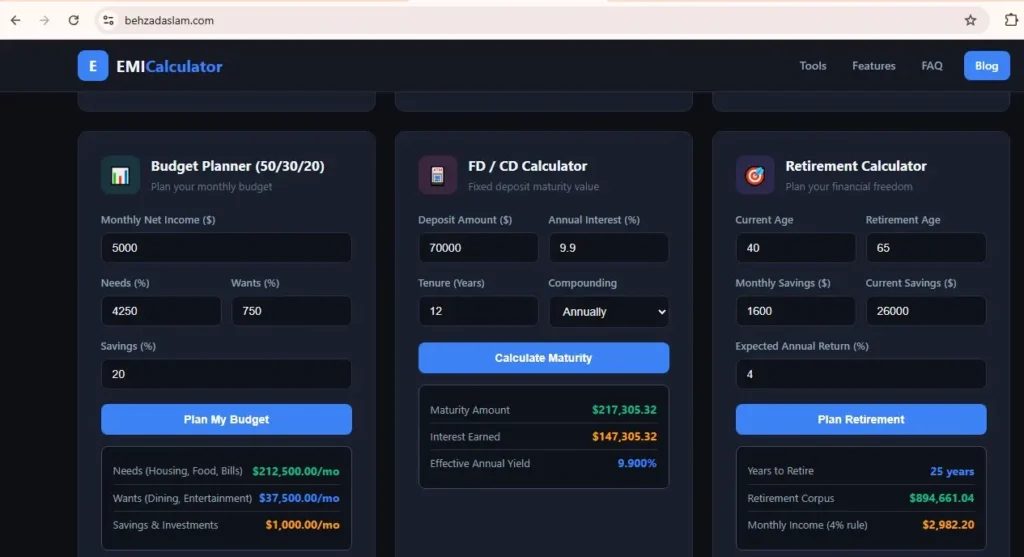
Our Budget Planner allows you to:
- Calculate Monthly Income
- Track Essential Expenses
- Monitor Discretionary Spending
- Estimate Monthly Savings
- Improve Cash Flow
- Reduce Financial Stress
- Set Savings Goals
- Prepare for Emergencies
- Make Better Financial Decisions
Whether you’re managing household expenses or planning your personal finances, this tool simplifies the budgeting process.
Start Planning Your Budget
Enter the following information:
- Monthly Income
- Housing Expenses
- Utilities
- Food & Groceries
- Transportation
- Insurance
- Entertainment
- Savings
- Other Expenses
Click Calculate Budget to instantly see:
- Total Monthly Expenses
- Remaining Balance
- Savings Amount
- Monthly Budget Summary
Budget Planner Tool
Enter your monthly income and expenses to instantly calculate your total spending, remaining balance, and estimated monthly savings.
Budget Planning Formula
A simple budgeting formula is:
Remaining Balance = Total Monthly Income − Total Monthly Expenses
Formula Explanation
| Symbol | Meaning |
| Total Income | Your monthly earnings |
| Total Expenses | Your monthly spending |
| Remaining Balance | Money left after expenses |
Understanding this formula helps you determine whether you’re living within your means or spending more than you earn.
Why Budget Planning Matters
A budget is more than just a list of numbers. It is a financial roadmap that helps you make informed decisions about spending, saving, and investing.
Without a clear budget, it is easy to overspend, miss savings opportunities, or struggle with unexpected expenses. By tracking your finances every month, you can identify unnecessary spending, build healthier financial habits, and stay focused on long-term goals.
Budget planning also helps reduce financial stress by giving you greater confidence and control over your money.
Real-Life Example
Example: Monthly Budget Planning
Sarah earns $5,000 per month after taxes.
Her monthly expenses include:
| Category | Amount |
| Housing | $1,600 |
| Utilities | $250 |
| Groceries | $600 |
| Transportation | $350 |
| Insurance | $300 |
| Entertainment | $250 |
| Savings | $800 |
| Other Expenses | $300 |
Total Expenses
$4,450
Remaining Balance
$550
By reviewing her monthly budget, Sarah realizes she can reduce entertainment expenses and increase her monthly savings to achieve her long-term financial goals faster.
Take Control of Your Money Today
Use our Free Budget Planner to organize your income, monitor expenses, improve savings, and make smarter financial decisions.
Explore our complete collection of financial calculators to plan loans, investments, retirement savings, and long-term wealth with confidence.
What Is Budget Planning?
Budget planning is the process of organizing your income and expenses so you can make informed financial decisions every month. Instead of wondering where your money went, a budget gives you a clear plan for where every dollar should go.
Whether you’re managing household expenses, paying off debt, saving for retirement, or building an emergency fund, a well-designed budget helps you stay in control of your finances.
At BehzadAslam.com, we believe budgeting isn’t about restricting your lifestyle—it’s about giving your money a purpose. A good budget allows you to spend confidently, save consistently, and prepare for both expected and unexpected expenses.
Using our Budget Planner, you can quickly estimate your monthly cash flow, identify unnecessary spending, and make adjustments that support your financial goals.
How Budget Planning Works
Budget planning begins with understanding two simple numbers:
- Total Monthly Income
- Total Monthly Expenses
Once you know these figures, you can calculate your remaining balance and decide how much money should go toward savings, debt repayment, or future investments.
A successful budget is not something you create once and forget. Instead, it should be reviewed regularly because income, expenses, and financial priorities change over time.
Many people find that reviewing their budget once a month helps them stay organized and avoid financial surprises.
The 50/30/20 Budget Rule
One of the most popular budgeting methods is the 50/30/20 Rule. It provides a simple framework for managing your monthly income without creating an overly complicated financial plan.
| Budget Category | Recommended Percentage | Examples |
| Needs | 50% | Rent, utilities, groceries, insurance |
| Wants | 30% | Entertainment, dining out, shopping |
| Savings & Debt | 20% | Emergency fund, retirement, loan payments |
Example
If your monthly income is $5,000:
- Needs: $2,500
- Wants: $1,500
- Savings & Debt Repayment: $1,000
This budgeting method helps create a healthy balance between enjoying life today and preparing for the future.
Zero-Based Budgeting
Another effective budgeting strategy is Zero-Based Budgeting.
With this method, every dollar of your income is assigned a specific purpose before the month begins.
For example:
| Category | Amount |
| Income | $4,500 |
| Housing | $1,400 |
| Food | $600 |
| Transportation | $350 |
| Utilities | $250 |
| Savings | $800 |
| Entertainment | $300 |
| Miscellaneous | $800 |
At the end of the planning process:
Income − Expenses = $0
This does not mean you have no money left. Instead, it means every dollar has been intentionally allocated to spending, saving, or investing.
Envelope Budgeting Method
The Envelope Budgeting Method is another practical approach, especially for people who struggle with overspending.
Traditionally, cash is divided into separate envelopes labeled with spending categories such as:
- Groceries
- Transportation
- Entertainment
- Dining Out
- Shopping
Once the money in an envelope is gone, no additional spending is allowed in that category until the next budgeting period.
Today, many people follow the same principle using budgeting apps and digital banking tools instead of physical envelopes.
Step-by-Step Budget Planning Example
Let’s see how budgeting works in a real-life scenario.
Monthly Income
Michael earns $6,000 per month after taxes.
Monthly Expenses
| Expense Category | Monthly Cost |
| Rent | $1,900 |
| Utilities | $300 |
| Groceries | $650 |
| Transportation | $400 |
| Insurance | $350 |
| Internet & Phone | $150 |
| Entertainment | $400 |
| Savings | $900 |
| Miscellaneous | $350 |
Total Monthly Expenses
$5,400
Remaining Balance
$600
After reviewing his spending, Michael realizes he spends more on entertainment than expected. By reducing entertainment expenses by $150 each month, he increases his monthly savings without significantly changing his lifestyle.
This example demonstrates how a simple budget review can improve financial stability over time.
Common Budgeting Mistakes
Even the best budgeting tools cannot help if poor financial habits continue. Here are some common mistakes to avoid.
Not Tracking Small Expenses
Daily coffee purchases, online subscriptions, and small impulse buys may seem insignificant individually, but together they can have a noticeable impact on your monthly budget.
Ignoring Irregular Expenses
Annual insurance premiums, holiday shopping, vehicle maintenance, and home repairs should be planned in advance rather than treated as unexpected surprises.
Setting Unrealistic Goals
Trying to eliminate all discretionary spending at once often leads to frustration. A realistic budget is easier to maintain over the long term.
Forgetting Emergency Savings
Without an emergency fund, unexpected expenses may force you to rely on credit cards or loans.
Never Reviewing Your Budget
Your financial situation changes over time. Reviewing your budget monthly helps ensure it continues supporting your goals.
Smart Money Management Tips
Good budgeting is about making consistent financial decisions rather than seeking perfection.
Pay Yourself First
Transfer money into savings before spending on non-essential purchases.
Build an Emergency Fund
Aim to save enough to cover several months of essential living expenses over time.
Reduce High-Interest Debt
Paying down high-interest balances can improve your overall financial health and free up money for future goals.
Review Recurring Expenses
Streaming services, memberships, and subscriptions should be evaluated regularly to ensure they still provide value.
Increase Savings Gradually
Whenever your income increases, consider directing part of the additional income toward savings or investments before increasing discretionary spending.
Practical Budget Planning Strategies
Successful budgeting is built on consistency rather than perfection.
Some practical habits include:
- Tracking expenses weekly instead of waiting until the end of the month.
- Setting realistic savings goals based on your income.
- Adjusting your budget after major life changes such as a new job, marriage, or moving to a different city.
- Using financial calculators to estimate savings, debt repayment, and investment growth before making major financial decisions.
- Reviewing your progress regularly and celebrating milestones, such as paying off a loan or reaching a savings target.
Budget planning is not about limiting your lifestyle—it is about creating a financial plan that supports the life you want to build.
Why Trust Our Budget Planner?
At BehzadAslam.com, we believe that effective budgeting is the foundation of long-term financial success. Our Budget Planner is designed to help individuals and families organize their income, understand their spending habits, and make smarter financial decisions using simple, easy-to-understand calculations.
Unlike complicated spreadsheets or paid budgeting software, our tool provides a fast, user-friendly experience that works on desktop, tablet, and mobile devices.
Why users trust our Budget Planner:
- Uses simple budgeting principles that are easy to understand
- Provides instant budget calculations
- Completely free to use
- No registration or downloads required
- Mobile-friendly design
- Secure browser-based calculations
- Built for everyday financial planning
- Regularly reviewed and improved
Please remember that the calculator provides estimates for educational and planning purposes. Your actual financial situation depends on your income, expenses, and personal financial decisions.
Financial Wellness & Long-Term Planning
Creating a budget is not just about reducing expenses—it is about building a healthier financial future.
A well-planned budget can help you:
- Build an emergency fund
- Pay off debt faster
- Save for retirement
- Plan for major purchases
- Reduce financial stress
- Improve long-term financial stability
The key to successful budgeting is consistency. Even small improvements in your monthly spending habits can create significant financial benefits over time.
Instead of focusing on perfection, aim to build sustainable habits that support your financial goals year after year.
Frequently Asked Questions
What is a Budget Planner?
A Budget Planner is a financial tool that helps you organize your monthly income, track expenses, calculate savings, and understand your overall cash flow.
Is this Budget Planner free?
Yes. Our Budget Planner is completely free and available to everyone without requiring registration.
Who should use a Budget Planner?
Anyone who wants better control over their finances can benefit from budgeting, including students, families, freelancers, employees, retirees, and small business owners.
How often should I update my budget?
Reviewing your budget once every month is a good practice. You should also update it whenever your income or expenses change significantly.
What budgeting method is best?
There is no single method that works for everyone. Many people successfully use the 50/30/20 Rule, while others prefer Zero-Based Budgeting or the Envelope Budgeting Method.
Can budgeting help reduce debt?
Yes. A well-managed budget helps identify unnecessary expenses, allowing you to direct more money toward debt repayment and savings.
Is my personal information stored?
No. All calculations are performed directly within your browser, and no personal financial information is stored.
Explore More Financial Calculators
Continue improving your financial planning with our free calculators:
- EMI Calculator
- Compound Interest Calculator
- SIP Calculator
- Retirement Calculator
- Savings Goal Calculator
- Debt Payoff Calculator
- Investment Growth Calculator
Take Control of Your Financial Future
Every strong financial plan begins with a simple budget. By understanding your income, tracking expenses, and planning your savings, you can make confident financial decisions that support both your short-term needs and long-term goals.
Start using our Free Budget Planner today and explore our growing collection of financial calculators to build a stronger financial future.
Google Discover Optimization
Smarter Budgeting Starts with Better Planning
Budgeting is one of the most practical financial skills you can develop. Whether your goal is saving more money, reducing debt, or improving your monthly cash flow, having a clear spending plan makes it easier to stay on track and make informed financial decisions.