Imagine this: your car breaks down, your rent is due, and your paycheck is delayed. Sounds stressful, right?
This is the reality for millions of Americans living paycheck to paycheck. One unexpected expense can throw everything off balance. That’s exactly why understanding emergency fund rules every adult should follow is no longer optional—it’s essential in 2026.
The good news? You don’t need a high income or financial expertise to build a solid safety net. With the right strategy and discipline, anyone can do it.
In this guide by Behzad Aslam, you’ll learn practical, real-world rules to build and protect your emergency savings.
What Is an Emergency Fund (And Why You Need One)
An emergency fund is money set aside for unexpected situations. It acts as your financial safety net when life doesn’t go as planned.
Common emergencies include:
- Job loss
- Medical bills
- Car repairs
- Urgent home maintenance
Without this fund, most people rely on credit cards or loans—which often leads to debt cycles. Having emergency savings gives you control and peace of mind.
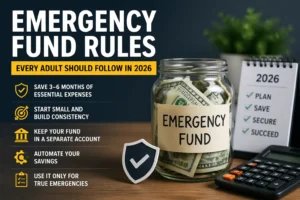
Rule #1: Save 3–6 Months of Essential Expenses
The most important of all emergency fund rules every adult should follow is having enough to cover your basic needs.
Start by calculating:
- Rent or mortgage
- Utilities
- Groceries
- Insurance
- Transportation
Example:
Let’s say your monthly expenses are $2,500:
- Minimum fund: $7,500 (3 months)
- Ideal fund: $15,000 (6 months)
Expert Insight:
If your job is unstable or you’re self-employed, aim for 6–9 months.
Rule #2: Start Small and Build Momentum
Many people delay saving because they think they need to save thousands at once. That’s a mistake.
Start with achievable milestones:
- First goal: $500
- Next goal: $1,000
- Final goal: 3–6 months of expenses
Even saving $25 per week can lead to over $1,300 in a year.
Rule #3: Keep Your Emergency Fund Separate
If your savings sit in your everyday account, you’ll likely spend it.
Smart approach:
- Open a separate high-yield savings account
- Avoid linking it to your debit card
- Make withdrawals slightly inconvenient
This reduces temptation and protects your money.
Rule #4: Automate Your Savings
One of the easiest ways to succeed is automation.
How to do it:
- Set up automatic transfers after each paycheck
- Choose a fixed percentage (5–15%)
Example:
If you earn $4,000/month and save 10%:
- Monthly savings: $400
- Yearly savings: $4,800
You won’t even notice the money leaving your account—but you’ll definitely notice the results.
Rule #5: Use It Only for True Emergencies
This is where many people fail.
Ask yourself:
“Is this urgent, necessary, and unexpected?”
Use your fund for:
- Medical emergencies
- Job loss
- Essential repairs
Avoid using it for:
- Shopping deals
- Vacations
- Upgrades
Discipline is what makes your emergency fund effective.
Rule #6: Rebuild Immediately After Using It
Using your emergency fund is okay—but leaving it empty is risky.
Action plan:
- Pause unnecessary spending
- Increase your savings rate temporarily
- Use bonuses or side income
Treat rebuilding as a top priority.
Rule #7: Adjust Your Fund Over Time
Your financial life will change—and your emergency fund should too.
Update your fund when:
- Your income increases
- Your expenses rise
- You move or start a family
Example:
If your expenses increase from $2,500 to $3,500:
- Your emergency fund should grow from $15,000 → $21,000
Step-by-Step Plan to Build Your Emergency Fund
Step 1: Track Your Spending
Monitor your expenses for 30 days.
Step 2: Set a Realistic Goal
Choose a target based on your lifestyle.
Step 3: Open a Separate Account
Prefer a high-yield savings account.
Step 4: Automate Savings
Make saving consistent and effortless.
Step 5: Increase Contributions
Boost your savings as your income grows.
Real-Life Example: Mike’s Emergency Fund Journey
Mike, a 35-year-old delivery driver in California, earns $3,200/month.
His situation:
- Monthly expenses: $2,400
- Target fund: $7,200
What he did:
- Saved $150/month automatically
- Reduced takeout spending
- Used a tax refund to accelerate savings
Result:
- Built his emergency fund in 2 years
- Avoided debt during a medical emergency
This shows that consistency matters more than income level.
Pros and Cons of an Emergency Fund
Pros:
- Financial security
- Less stress during emergencies
- No reliance on debt
- More confidence in decision-making
Cons:
- Takes time to build
- Lower returns compared to investments
- Requires discipline
Expert Insight:
Emergency funds are not meant to grow wealth—they’re meant to protect it.
Common Mistakes to Avoid
- Keeping money in cash at home
- Investing emergency funds in stocks or crypto
- Not adjusting for inflation
- Using funds for non-emergencies
- Ignoring the need to rebuild
Avoiding these mistakes keeps your financial safety net strong.
Best Places to Keep Your Emergency Fund in 2026
- High-yield savings accounts
- Money market accounts
- Credit union savings
Avoid:
- Stocks
- Cryptocurrency
- Long-term investments
Your emergency fund should always be safe, liquid, and accessible.
Important Disclaimer
This content is for educational purposes only and not financial advice.
Conclusion: Build Your Safety Net Before You Need It
Emergencies are unpredictable—but your preparation doesn’t have to be.
By following these emergency fund rules every adult should follow, you’re not just saving money—you’re creating financial stability and peace of mind.
Start small. Stay consistent. Keep going.
Your future self will thank you for starting today.
FAQs
1. How much should I save in an emergency fund?
You should save 3–6 months of essential expenses, depending on your financial stability.
2. Where is the best place to keep emergency savings?
A high-yield savings account is the safest and most accessible option.
3. Can I invest my emergency fund?
No. Emergency funds should remain liquid and risk-free, not invested.
4. How fast can I build an emergency fund?
Most people build it within 6–24 months with consistent saving.
5. What qualifies as a real emergency?
Unexpected and urgent expenses like medical bills, job loss, or essential repairs.
About the Author:
Behzad Aslam is a personal finance content creator focused on AI-powered money strategies, budgeting, and smart saving techniques for modern users. He shares practical, beginner-friendly financial guides at behzadaslam.com.