
What is finance? Finance plays a critical role in modern life. From managing personal savings to running global corporations and government budgets, finance influences nearly every economic activity.
In simple terms, finance is the study and management of money, investments, and financial resources. It involves activities such as budgeting, saving, borrowing, lending, and investing. Individuals, businesses, and governments all rely on finance to make informed financial decisions and achieve their economic goals.
In this comprehensive guide, we will explore the definition of finance, its history, different types, and why it is important in everyday life and the global economy.
What Is Finance? (Simple Definition)
Finance refers to the management, creation, and study of money and investments. It involves the processes of acquiring funds, allocating resources, managing risks, and planning for future financial needs.
Finance includes activities such as:
- Budgeting
- Saving money
- Investing
- Borrowing and lending
- Financial planning
- Risk management
In simple words, finance helps individuals and organizations manage their money effectively and make better financial decisions.
For example:
- A family creating a monthly budget is practicing finance.
- A company investing in new technology is using finance.
- A government managing taxes and public spending is involved in finance.
Finance Meaning in Simple Words
Understanding what is finance helps individuals manage money, plan investments, and make better financial decisions.
It helps people answer important questions such as:
- How much money should I save?
- Where should I invest?
- How can I manage debt?
- How can businesses grow financially?
Finance provides tools and strategies that help individuals and organizations achieve financial stability and long-term growth.
For beginners, finance can simply be understood as smart money management.
The History of Finance
The concept of finance has existed for thousands of years. As civilizations developed trade and economic systems, financial practices evolved to support commerce and economic growth.
Ancient Financial Systems
Early financial systems emerged in ancient civilizations such as:
- Mesopotamia
- Ancient Egypt
- Ancient Greece
- Roman Empire
Merchants and traders used basic financial tools like loans, interest, and currency to conduct trade. Temples and wealthy merchants often acted as early financial institutions.
Development of Banking
During the Middle Ages, banking systems began to develop in Europe. Italian merchant families played a significant role in establishing banking practices.
One important historical banking family was the Medici family, who helped develop modern banking techniques in the 15th century.

Banks began providing services such as:
- Deposits
- Loans
- Currency exchange
- Credit systems
These innovations laid the foundation for modern financial systems.
Modern Financial Systems
Modern finance began to take shape in the 18th and 19th centuries with the development of financial markets and institutions.
Major financial institutions emerged, including:
These institutions help regulate financial systems, stabilize economies, and support international economic development.
Today, finance includes advanced areas such as:what is finance
- Investment banking
- Cryptocurrency markets
- Global financial markets
- Financial technology (FinTech)
The Three Main Types of Finance
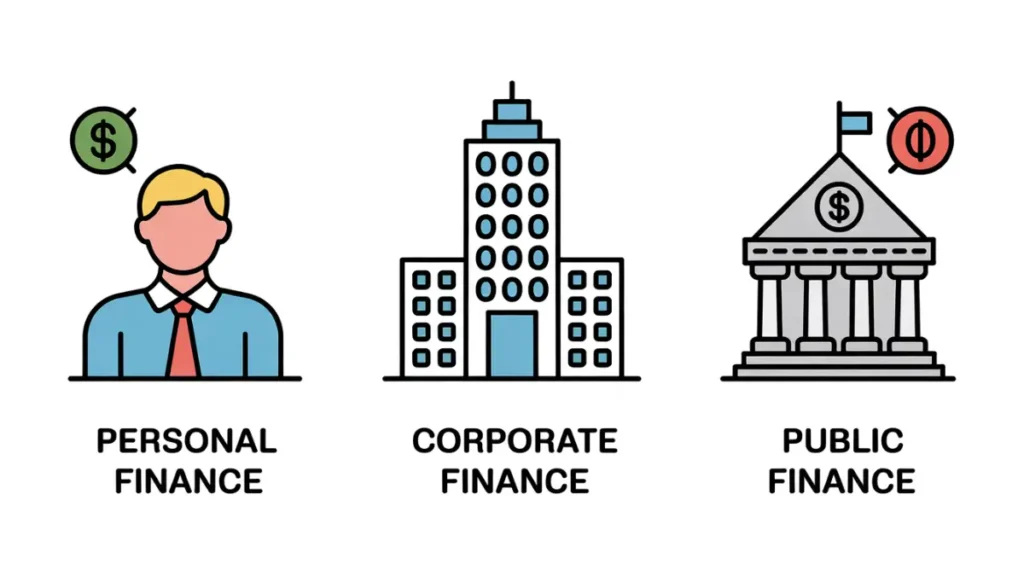
Finance is generally divided into three major categories. Each category serves a different purpose in the economy.
| Type of Finance | Description |
| Personal Finance | Managing money for individuals and families |
| Corporate Finance | Financial decisions made by businesses |
| Public Finance | Financial management by governments |
Let’s explore each type in detail.
Personal Finance
Personal finance focuses on how individuals and households manage their money.
It includes activities such as:
- Budgeting
- Saving money
- Investing
- Retirement planning
- Managing debt
- Insurance planning
Personal finance helps individuals make smarter financial decisions and achieve goals such as:
- Buying a house
- Saving for retirement
- Paying for education
- Building wealth
Many beginners search online to learn what is finance and how it affects their daily financial life.
Corporate Finance
Corporate finance focuses on how businesses manage their financial resources.
Companies must make important financial decisions such as:
- Raising capital
- Investing in projects
- Managing operating costs
- Maximizing profits
- Managing financial risks
Corporate finance aims to increase the value of a company while maintaining financial stability.
Key corporate finance activities include:what is finance
- Capital budgeting
- Financial analysis
- Investment planning
- Risk management
Large corporations rely heavily on financial experts to guide strategic financial decisions.
Public Finance
Public finance refers to the financial activities of governments.
Governments manage large budgets to fund public services such as:
- Education
- Healthcare
- Infrastructure
- Defense
- Social welfare programs
Public finance includes three main components:
- Government revenue (taxes)
- Government spending
- Public debt management
Organizations such as the World Bank and International Monetary Fund often assist governments in managing financial challenges and promoting economic stability.
Why Finance Is Important
Finance is essential because it helps individuals, businesses, and governments manage resources efficiently.
Here are some key reasons why finance is important.
1. Helps Manage Money Efficiently
Finance provides tools such as budgeting and financial planning that help people manage their income and expenses.
This allows individuals to:
- Avoid unnecessary debt
- Build savings
- Achieve financial security
2. Supports Business Growth
Businesses rely on finance to invest in new products, expand operations, and hire employees.
Without proper financial planning, businesses may struggle to grow or remain profitable.
3. Promotes Economic Development
Finance plays a crucial role in economic development. Financial institutions help allocate resources to productive investments, which leads to:
- Job creation
- Infrastructure development
- Increased productivity
4. Enables Investment Opportunities
Finance allows individuals and organizations to invest in assets such as:what is finance
- Stocks
- Bonds
- Real estate
- Businesses
Investments help grow wealth over time.
5. Helps Manage Risk
Financial systems provide tools such as insurance and diversification to manage financial risks.
This protects individuals and organizations from unexpected financial losses.
Key Components of Finance
Finance includes several important components that work together to support financial systems.
Financial Markets
Financial markets allow investors and businesses to trade financial assets.
Examples include stock markets, bond markets, and commodity markets.
Financial Institutions
Financial institutions provide financial services such as lending, saving, and investing.
Examples include:what is finance
- Banks
- Credit unions
- Investment firms
- Insurance companies
Financial Instruments
Financial instruments are assets that can be traded or invested in.
Examples include:what is finance
- Stocks
- Bonds
- Mutual funds
- Derivatives
Financial Management
Financial management involves planning, organizing, and controlling financial resources to achieve financial goals.
It is a critical function for both businesses and individuals.
How Finance Impacts the Global Economy
Finance plays a major role in shaping global economic activity.

When financial systems function effectively, they:
- Encourage investment
- Promote economic growth
- Improve productivity
- Support international trade
Financial institutions such as the International Monetary Fund and World Bank help stabilize global economies by providing financial assistance and policy guidance to countries facing economic challenges.
Financial markets also allow capital to move across borders, enabling businesses to access funding and expand globally.
Finance Examples in Everyday Life
Finance affects daily life in many ways.
Here are some common examples.
Budgeting
Creating a monthly budget helps individuals track income and expenses, ensuring that spending stays within financial limits.
Saving Money
Saving money in a bank account helps individuals prepare for emergencies and future expenses.
Investing
People invest in assets such as stocks, mutual funds, or real estate to grow their wealth over time.
Taking Loans
Individuals may borrow money for large purchases such as homes or education. Proper financial planning ensures that loans are manageable.
Insurance
Insurance helps protect individuals from financial losses caused by accidents, illness, or property damage.
Common Finance Terms Beginners Should Know
Understanding basic financial terminology helps people navigate financial decisions more confidently.
Some important finance terms include:
| Term | Meaning |
| Asset | Anything that has financial value |
| Liability | A financial obligation or debt |
| Equity | Ownership value in an asset |
| Investment | Using money to generate future returns |
| Interest | Cost of borrowing money |
| Capital | Money used for investment or business operations |
Learning these terms improves financial literacy and helps individuals make better financial decisions.
Benefits of Understanding Finance
Having a basic understanding of finance provides many advantages.
Better Financial Decisions
People who understand finance can make smarter decisions about spending, saving, and investing.
Reduced Financial Stress
Proper financial planning reduces financial uncertainty and helps individuals prepare for unexpected expenses.
Wealth Building
Understanding investments and financial strategies helps individuals grow wealth over time.
Financial Independence
Financial knowledge allows individuals to achieve long-term independence and security.
Frequently Asked Questions (FAQ)
What is finance in simple terms?
Finance is the management of money, investments, and financial resources. It involves activities such as saving, borrowing, investing, and budgeting.
What are the three types of finance?
The three main types of finance are:what is finance
- Personal finance
- Corporate finance
- Public finance
Each type focuses on managing financial resources for individuals, businesses, or governments.
Why is finance important?
Finance is important because it helps individuals and organizations manage money efficiently, support economic growth, and achieve financial goals.
What is the role of finance in business?
Finance helps businesses raise capital, manage expenses, invest in growth opportunities, and maximize profits.
How does finance affect the economy?
Finance supports economic development by enabling investment, facilitating trade, and allocating resources efficiently across industries.
Final Thoughts
Finance is a fundamental part of modern society. It provides the systems and tools that allow individuals, businesses, and governments to manage money effectively and achieve economic goals.
By understanding the definition, types, history, and importance of finance, individuals can make better financial decisions, improve financial stability, and build long-term wealth.
Whether you are budgeting for your household, investing in the stock market, or running a business, finance plays a key role in shaping financial success and economic growth.
Developing financial knowledge is one of the most valuable skills anyone can have in today’s complex economic world.
About the Author
Behzad Aslam is a personal finance blogger who writes about financial education, AI tools for money management, and smart budgeting strategies for everyday users.