
Global oil markets can react within minutes to geopolitical signals. Recently, oil prices crash after statements from Donald Trump suggested that tensions with Iran could ease and that the conflict might end sooner than expected.
Energy markets immediately reacted to the possibility of reduced geopolitical risk. Traders, investors, and governments around the world began reassessing supply risks and economic forecasts. Because oil plays a central role in transportation, manufacturing, and energy production, any sudden change in prices can influence inflation, stock markets, and even household budgets.
This article explains why oil prices crashed, how geopolitical tensions affect energy markets, and what this development could mean for the global economy in 2026 and beyond.
Why Oil Prices Crash Suddenly Happened
Oil prices are highly sensitive to geopolitical risk. When markets believe that supply disruptions may occur, prices rise rapidly. When those risks appear to fade, prices can fall just as quickly.
The recent price decline happened because traders believed that a potential de-escalation of tensions in the Middle East could prevent supply disruptions.
Several factors contributed to the sudden drop:
1. Reduced Risk of Supply Disruption
When conflicts involve major oil-producing regions, traders worry about disruptions to supply routes, pipelines, or production facilities. If the possibility of conflict decreases, those fears fade.
2. Market Expectations
Oil prices are not determined only by current supply and demand. Markets also price in future expectations. Even the possibility of peace can influence futures contracts.
3. Investor Sentiment
Institutional investors often move large amounts of capital quickly when geopolitical signals change. These moves can amplify price swings in global energy markets.
4. Algorithmic Trading
Modern financial markets rely heavily on automated trading systems. These systems analyze headlines and geopolitical signals and can trigger massive buying or selling within seconds.
Because of these factors, even a single political statement can trigger a significant reaction in global oil prices.
“The oil prices crash reflects how sensitive markets are to geopolitical developments.”
Trump’s Statement and Market Reaction
During recent remarks, Donald Trump suggested that negotiations or diplomatic developments could lead to a faster resolution of tensions involving Iran.
Markets interpreted this as a signal that the risk of prolonged conflict might be lower than previously expected.
As a result:
- Oil futures declined rapidly
- Energy stocks experienced volatility
- Airline and transportation stocks moved higher
- Investors shifted toward risk-on assets
Oil markets are particularly sensitive to statements from political leaders because government decisions can directly influence sanctions, trade restrictions, and military actions.
Even when details are limited, the perception of potential peace can have a major impact on market psychology.
How the Iran Conflict Influences Oil Markets
The Middle East remains one of the most critical regions for global oil production. Countries in the region collectively produce a large portion of the world’s crude oil supply.
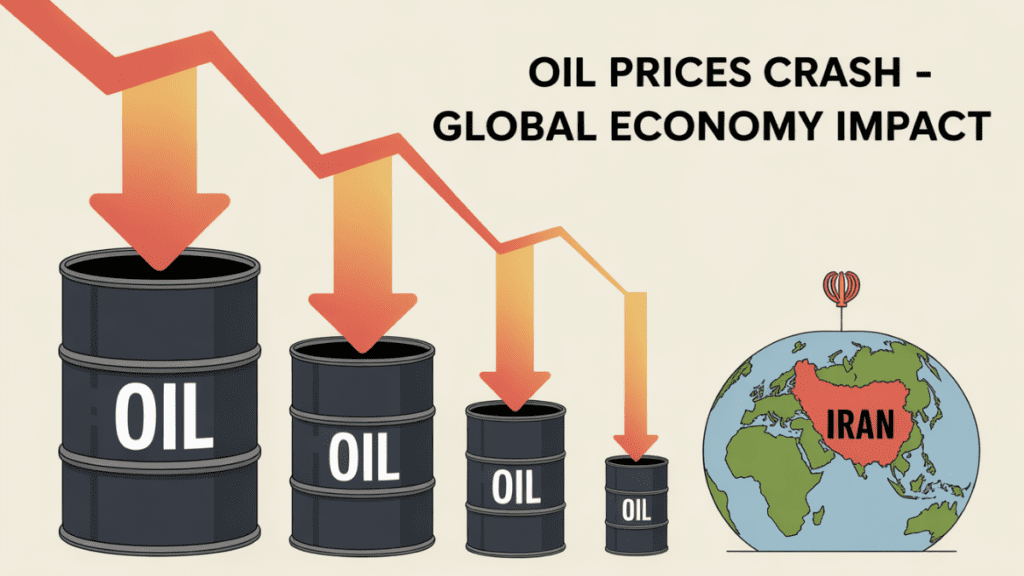
One of the most important strategic locations in global energy trade is the Strait of Hormuz.
Why the Strait of Hormuz Matters
The Strait of Hormuz is a narrow shipping passage connecting the Persian Gulf to global markets. Roughly one-fifth of the world’s oil supply passes through this route.
If tensions rise in the region, markets immediately worry about potential disruptions in this passage.
Possible risks include:
- Shipping delays
- Military blockades
- Damage to energy infrastructure
- Insurance costs for oil tankers
Even rumors of disruption can send oil prices soaring. Conversely, signals of peace or diplomatic progress can push prices downward.
Because of this dynamic, geopolitical developments involving Iran are closely monitored by global energy traders.
Impact of Oil Prices Crash on the Global Economy
Oil prices influence almost every major sector of the global economy. A sudden drop in prices can have both positive and negative effects depending on the industry and region.
1. Lower Inflation Pressure
When oil prices fall, the cost of fuel, transportation, and shipping decreases. This can reduce inflation, which is especially important for economies struggling with rising living costs.
Lower inflation may also give central banks more flexibility in setting interest rates.
2. Lower Transportation Costs
Airlines, shipping companies, and logistics firms benefit significantly from cheaper fuel.
Industries that may benefit include:
- Airlines
- Delivery services
- Trucking companies
- Public transportation systems
“Investors reacted quickly to the oil prices crash, moving capital into safer assets.”
3. Consumer Spending Boost
When gasoline prices decline, households often have more disposable income. This can increase spending on goods, travel, and entertainment.
For consumer-driven economies like the United States, lower fuel prices can stimulate economic growth.
4. Pressure on Oil-Exporting Countries
While consumers benefit from lower oil prices, countries that depend heavily on oil exports may face economic challenges.
Lower oil prices can reduce government revenue in energy-dependent economies.
What This Means for Gas Prices
One of the most common questions people ask during oil market shifts is whether gasoline prices will follow.
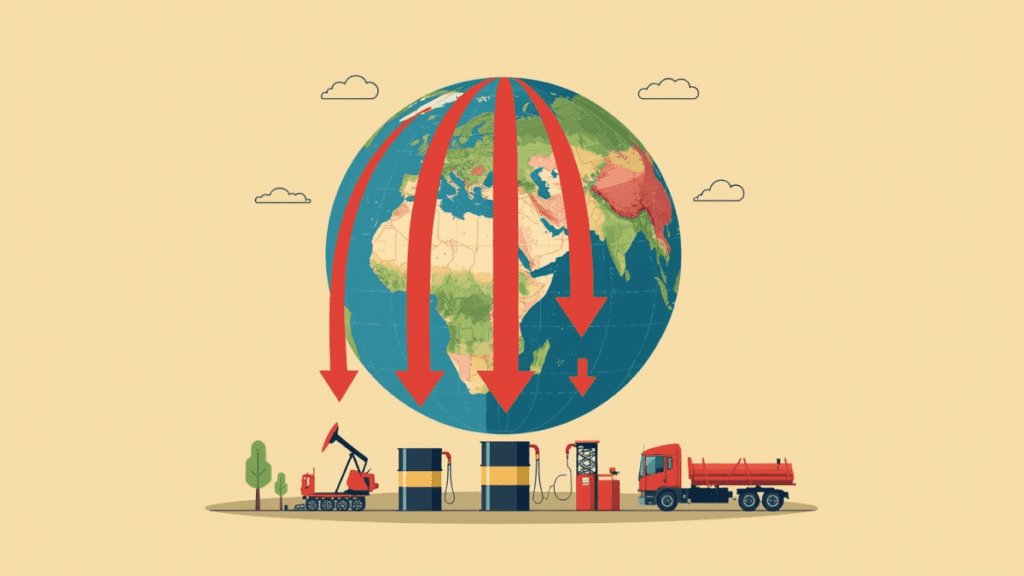
The answer is usually yes—but not immediately.
Gasoline prices depend on several factors:
- Crude oil prices
- Refining costs
- Transportation costs
- Local taxes
- Seasonal demand
Because crude oil represents a large portion of fuel costs, sustained declines in oil prices usually lead to lower gasoline prices within a few weeks.
For consumers, this could mean:
- Lower commuting costs
- Cheaper travel
- Reduced household expenses
However, if geopolitical tensions return, fuel prices could quickly rise again.
Global Financial Market Reactions
Oil price movements often trigger reactions across global financial markets.
Stock Markets
Lower oil prices can benefit sectors such as:
- Airlines
- Manufacturing
- Retail
- Transportation
However, energy companies may see their stock prices decline if oil prices fall significantly.
Currency Markets
Countries that export large amounts of oil often see their currencies move in response to oil price changes.
For example, currencies linked to energy exports may weaken when oil prices decline.
Commodity Markets
Oil price changes can also influence other commodities such as natural gas, metals, and agricultural products.
Because energy costs affect production and transportation, oil prices often influence broader commodity markets.
Oil Price Forecast for 2026
Predicting oil prices is extremely difficult because the market is influenced by many factors.
These include:
- Geopolitical tensions
- Global economic growth
- OPEC production policies
- Technological advances in energy
- Renewable energy adoption
Economic institutions such as the International Monetary Fund and the World Bank regularly analyze these trends when forecasting global economic conditions.
Some analysts believe oil prices may stabilize if geopolitical risks decline. Others argue that ongoing tensions and supply constraints could keep markets volatile.
In general, experts expect continued price fluctuations rather than long periods of stability.
What Happens If the Conflict Actually Ends
If tensions involving Iran were to fully ease, several long-term economic changes could occur.
Increased Oil Supply
A reduction in sanctions or trade restrictions could increase the amount of oil entering global markets.
Higher supply generally pushes prices lower.
More Stable Energy Markets
Reduced geopolitical tension would decrease uncertainty in oil markets. This could make prices less volatile and more predictable.
Improved Global Trade
Lower energy costs can reduce transportation expenses for global trade.
This can benefit:
- Manufacturing
- Retail supply chains
- International shipping
Economic Growth Potential
Cheaper energy often supports economic growth by reducing costs for businesses and consumers.
However, the long-term impact would depend on broader geopolitical developments and energy policy decisions.
Expert Insight: Why Oil Markets React So Fast to War News
Energy markets react quickly to geopolitical developments because oil supply chains are extremely complex.
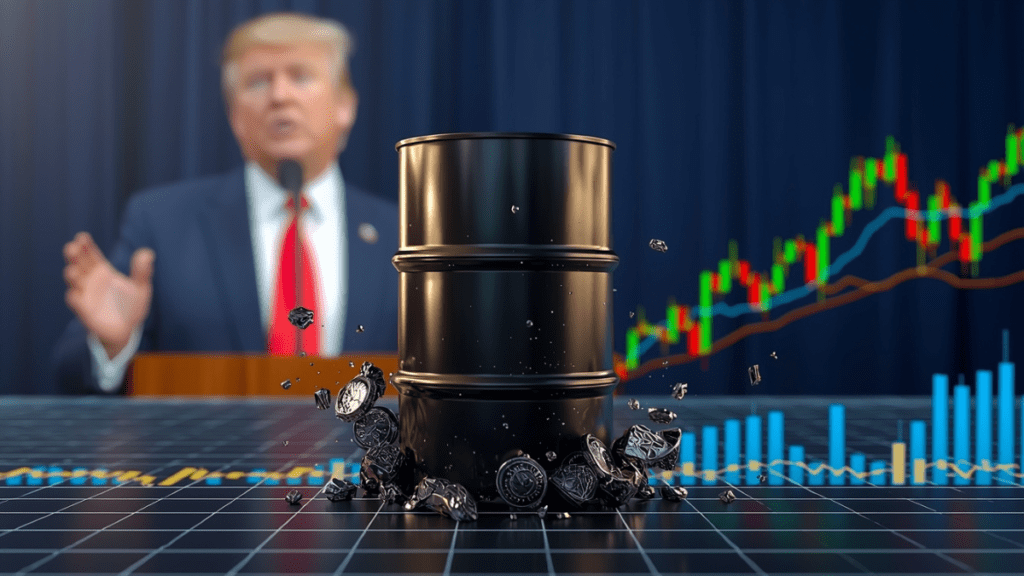
Oil production involves:
- Exploration
- Drilling
- Transportation
- Refining
- Distribution
Any disruption in one part of this chain can affect global supply.
Because these systems operate at massive scale, even small disruptions can have global consequences.
Traders therefore react immediately to news that might influence supply security.
This explains why oil prices can swing dramatically in response to political statements or diplomatic developments.
Key Takeaways
The recent oil price drop highlights how sensitive global markets are to geopolitical signals.
“The recent oil prices crash shows the importance of monitoring geopolitical events for both investors and consumers.”
Here are the most important points:
- Oil prices dropped after statements from Donald Trump suggested tensions with Iran could ease.
- Markets reacted quickly because conflict in the region threatens global energy supply routes.
- Lower oil prices can reduce inflation and transportation costs.
- Consumers may eventually benefit from lower gasoline prices.
- Energy-exporting countries may face economic pressure if prices remain low.
- Future oil price movements will depend on geopolitical developments and global economic conditions.
Energy markets will continue watching developments closely because any escalation or de-escalation could quickly change the outlook for oil prices.
Frequently Asked Questions (FAQ)
Why did oil prices crash recently?
Oil prices fell after signals that tensions involving Iran might ease, reducing fears of supply disruptions in global energy markets.
How does war affect oil prices?
Conflicts in major oil-producing regions can disrupt supply routes and production facilities, causing oil prices to increase due to supply uncertainty.
Will gas prices fall if oil prices drop?
Yes, gasoline prices usually follow crude oil prices, although the change may take several weeks to appear at gas stations.
Why is the Strait of Hormuz important for oil?
The Strait of Hormuz is one of the most important oil shipping routes in the world, carrying a large portion of global oil exports.
Can oil prices rise again quickly?
Yes. Oil markets are highly volatile and can react rapidly to geopolitical events, economic changes, or supply disruptions.