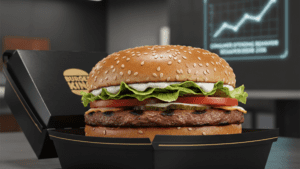
In the current market, understanding Consumer Spending Behavior 2026 is the key to business survival. For the first time in nearly a decade, the “Home of the Whopper” is giving its crown jewel a makeover. After years of hearing from frustrated fans about “smashed” burgers and lacklustre presentation, Burger King is rolling out a premium version of its iconic sandwich across 7,000 locations.
But if you think this is just about a new box or a creamier condiment, look closer. This is a masterclass in consumer psychology and brand survival in a tightening 2026 economy. As someone who tracks market trends, I find this move fascinating. Here is what the “Whopper 2.0” reveals about how Americans are spending their money today and how Consumer Spending Behavior 2026 is shifting.
1. The “Tuxedo” Strategy: Value Over Price
Burger King US President Tom Curtis famously described the update as putting the burger in a “tuxedo instead of a leisure suit.” By switching from flimsy paper wraps to sturdy clam shell boxes and introducing a glazed artisan bun, the brand is tackling “perceived value.”
In 2026, the American consumer is “inflation-weary.” They aren’t necessarily looking for the cheapest meal—they are looking for a meal that doesn’t feel like a waste of money. If your product feels “cheap” or arrives “smashed,” customers feel cheated. Improving the physical experience—the weight, the look, the texture—justifies the purchase without needing a discount. This is a core pillar of Consumer Spending Behavior 2026: people want quality they can feel.
2. Managing “Decision Risk” in Uncertain Times
You might notice that while the bun and mayo changed, the beef patty remained exactly the same. This was a calculated move to address Consumer Spending Behavior 2026. In a volatile economy, purchasing something new is a “high risk” for the average household.
Consumers are protective of their “treat money.” They want the comfort of the familiar, but they want it to be better. By keeping the core product (the flame-grilled beef) identical, Burger King reduces “decision risk.” They are luring back “brand-sour” customers with the promise of a premium experience, without the fear that the flavor they loved has disappeared.
3. The Power of Radical Accessibility
In an era of cold AI chatbots and automated support, Tom Curtis did something daring: he gave out his direct phone number. Spending hours on the phone with everyday diners, he heard the raw truth. This direct line to the customer is essential to understand Consumer Spending Behavior 2026.
The Takeaway for Businesses: Real-time feedback is the ultimate North Star. If you aren’t “hitting it dead on” by addressing the failures your customers actually care about, no amount of glossy marketing will save your bottom line. Customers in 2026 want to be heard, not just sold to.
4. The Franchisee Gamble: Investing in Growth
Upgrading the Whopper costs each restaurant owner roughly $4,000 a year. In a market where labor costs are rising, this is a massive gamble. Burger King has advised its franchisees not to raise prices. This shows a stark reality of Consumer Spending Behavior 2026: Brands have lost their pricing power.
Instead of passing costs to the consumer, BK is betting that a better product will drive higher sales volume. They are choosing “Long-term Loyalty” over “Short-term Margin.” This strategy acknowledges that the 2026 consumer will simply walk away if the price-to-quality ratio is off.
5. Why Traditional Fast Food is Evolving
Beyond the Whopper, we see a broader shift in how people interact with brands. Consumer Spending Behavior 2026 is no longer just about speed; it’s about the “Fast-Casual” experience at a “Fast-Food” price point. People are comparing their $12 burger to a $15 sit-down meal. If the gap in quality is too large, they will spend the extra $3 for a better experience. Burger King’s move is a preemptive strike to close that gap and keep their seats full.
Final Thoughts: What This Means for You
Whether you are a business owner or a conscious consumer, the Whopper’s transformation is a sign of the times. In 2026, the “factory-produced” feel is out. Authenticity, quality presentation, and listening to the human on the other end of the transaction are the only ways to win in this economy.
Understanding Consumer Spending Behavior 2026 shows us that while people are spending more carefully, they are still willing to spend on brands that respect their money and their experience.
What do you think? Is a “premium bun” enough to make you choose Burger King over the competition, or has the fast-food industry reached its limit? Let me know in the comments below.