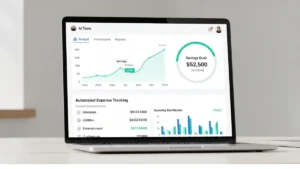
Today, AI tools for saving money are helping people automatically track spending, control budgets, and build real savings without extra effort.
This is where AI tools for saving money are changing everything.
In 2026, artificial intelligence is no longer just a tech buzzword. It has become a practical assistant that helps millions of people turn their paycheck into real, consistent savings automatically.
This guide explains how AI tools actually work, which ones are worth using, and how you can use them to build savings without stress.
Best AI tools for saving money in 2026
This is exactly where AI tools for saving money provide a major advantage by removing manual effort and improving financial decision-making.
Most people:
- Don’t know where their money really goes
- Forget small recurring expenses
- Underestimate impulsive spending
- Overestimate their ability to “save later”
Traditional tools like spreadsheets or basic budgeting apps require constant manual effort. After a few weeks, most people stop updating them.
AI solves this by doing what humans struggle with:
- Tracking every transaction
- Analyzing patterns
- Predicting future expenses
- Making decisions based on data, not emotion
How AI tools for saving money automate your budget
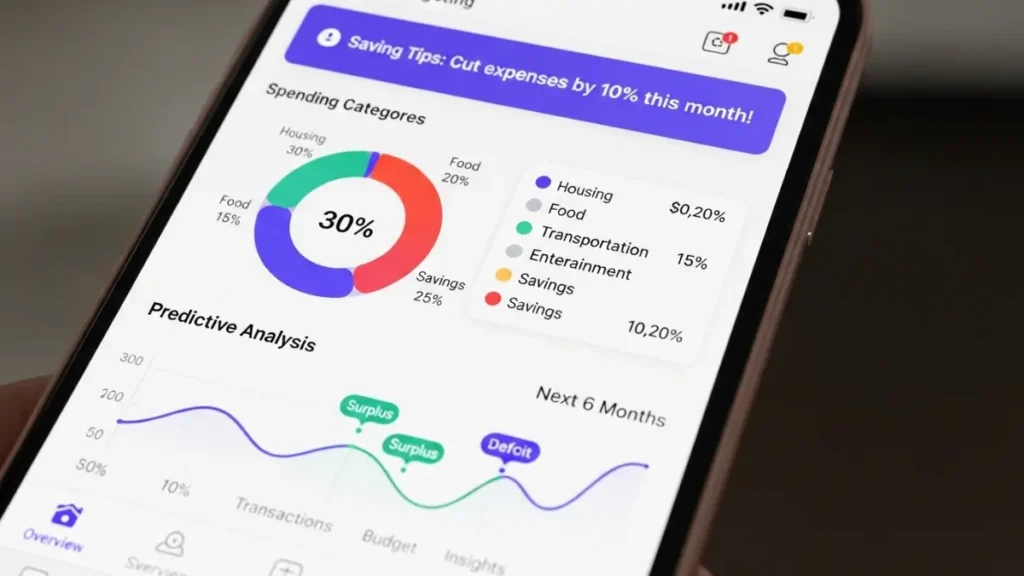
AI-powered personal finance apps use machine learning to analyze your financial behavior in real time.
They can:AI tools for saving money
- Categorize expenses automatically
- Identify wasteful spending
- Forecast upcoming bills
- Suggest optimal saving amounts
- Adjust budgets dynamically
Instead of you managing money, AI manages money with you.
This shift from manual budgeting to intelligent automation is the biggest reason people are finally seeing real savings.
Why AI tools for saving money work better than traditional budgeting
Not every app with “AI” in the name is useful. Real AI finance tools share these features:
1. Automation
The tool connects to your bank and tracks spending without manual input.
2. Personalization
It learns your habits instead of forcing generic budgets.
3. Predictive Analysis
It forecasts future expenses and warns you before problems.
4. Behavioral Insights
It explains why you’re overspending, not just where.
5. Action-Oriented Suggestions
It doesn’t just show data — it tells you what to do next.
If a tool does not do these five things, it’s not real AI.
Top AI Tools for Turning Paycheck into Savings
Below are the best AI tools for saving money that are currently helping users in the U.S. turn income into consistent savings.
1. Mint
Mint uses AI to track spending, categorize transactions, and show where your money leaks every month.
Best for:AI tools for saving money
- Beginners
- Expense tracking
- Subscription monitoring
Why it works:
Mint identifies recurring charges and suggests areas to cut without effort.
2. Cleo
Cleo is an AI chatbot that acts like a financial coach.
Best for:
- Behavioral change
- Spending discipline
- Younger users

Why it works:
It uses psychology + AI to challenge bad habits and encourage savings.
3. Rocket Money
Rocket Money focuses on reducing fixed monthly costs.
Best for:
- Subscription cancellation
- Bill negotiation
- Hidden expense detection
Why it works:
It uses AI to analyze bills and even negotiates on your behalf.
4. YNAB
YNAB uses predictive budgeting based on income patterns.
Best for:
- Families
- Debt reduction
- Long-term planning
Why it works:
It forces every dollar to have a job — with AI forecasting future needs.
5. Digit
Digit automatically saves small amounts without you noticing.
Best for:
- Passive savers
- Emergency funds
- Low-effort users
Why it works:
AI predicts how much you can safely save daily.
How AI Automates Budgeting
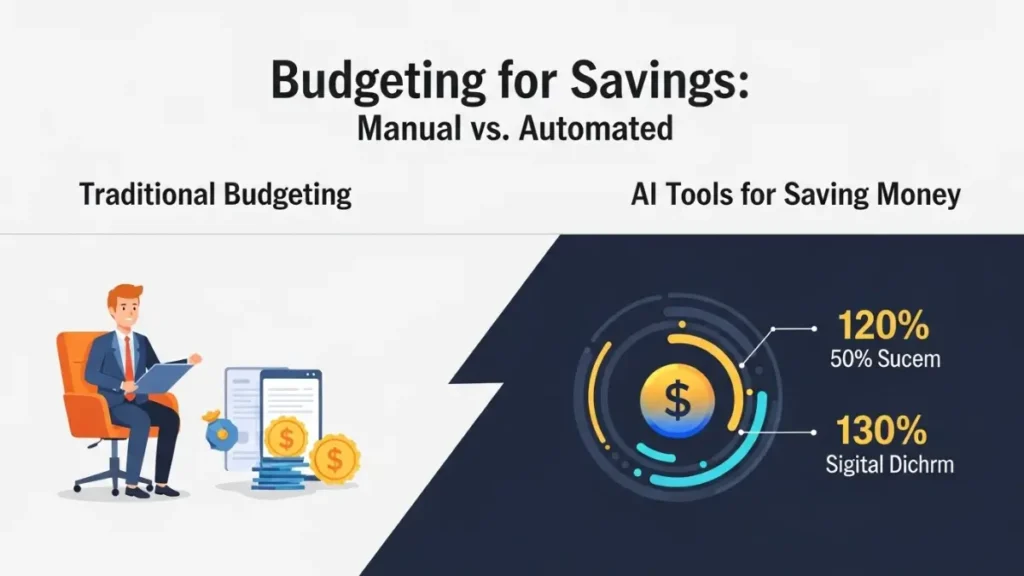
Traditional budgeting:
You create a plan → You try to follow it → You fail → You feel guilty
AI budgeting:
AI analyzes behavior → Creates plan → Adjusts automatically → You save without thinking
AI looks at:
- Income timing
- Spending cycles
- Fixed vs variable expenses
- Behavioral patterns

Then it creates dynamic budgets that evolve every month.
This removes the biggest problem in finance:
Human inconsistency.
Real Example: How AI Saves $400 Per Month
Let’s take a realistic example.
Monthly income: $4,000
Fixed expenses: $2,300
Remaining: $1,700
Without AI:
- Overspending on food
- Forgotten subscriptions
- No structured savings
With AI:
- $65 saved on subscriptions
- $120 saved on food spending
- $90 saved on impulse purchases
- $125 auto-saved daily by Digit
Over a year:
$4,800 saved without stress
That’s the power of automation.
AI vs Traditional Budgeting
| Feature | Traditional | AI Tools |
| Manual input | Yes | No |
| Real-time analysis | No | Yes |
| Behavior tracking | No | Yes |
| Predictive planning | No | Yes |
| Emotional bias | High | Low |
| Consistency | Low | High |
AI doesn’t replace you.
It replaces your worst habits.
How to Choose the Right AI Tool
Choose based on your main goal:

If your goal is…
- Tracking spending → Mint
- Building discipline → Cleo
- Cutting bills → Rocket Money
- Planning long-term → YNAB
- Saving passively → Digit
Don’t use 5 tools.
Use 1 or 2 that match your behavior.
Mistakes to Avoid
1. Using Too Many Apps
This creates confusion and decision fatigue.
2. Ignoring AI Recommendations
If you override AI every time, nothing changes.
3. Expecting Instant Wealth
AI improves systems, not miracles.
4. Not Reviewing Monthly
Even AI needs feedback.
Are AI Finance Tools Safe?
Most reputable tools:
- Use bank-level encryption
- Are read-only (no transaction access)
- Follow U.S. financial regulations
However:
- Always use official apps
- Never share passwords
- Avoid unknown platforms
Security matters as much as savings.
The Future of AI in Personal Finance
By 2030, AI will:
- Predict financial stress before it happens
- Auto-invest surplus income
- Optimize tax strategies
- Provide real-time financial coaching
Finance will become:
Personalized, automated, and intelligent.
People who adopt AI early will have a massive financial advantage.
Many of these AI tools for saving money use machine learning to predict your expenses and automatically adjust your savings goals.
Frequently Asked Questions (FAQ)
Can AI really help me save money?
Yes. AI identifies patterns humans miss and automates savings.
Are AI budgeting tools free?
Most offer free versions with optional premium features.
Which AI app is best for beginners?
Mint and Cleo are the easiest to start with.
Is AI better than Excel budgeting?
Yes. Excel tracks. AI predicts, learns, and acts.
Do I need good income for AI tools?
No. AI works even better for tight budgets.
Final Thoughts
Saving money isn’t about willpower anymore.
It’s about systems.
AI tools create systems that:
- Track automatically
- Adjust intelligently
- Save consistently
- Reduce emotional mistakes
The shift from paycheck to savings is no longer about discipline.
It’s about delegating your financial habits to artificial intelligence — and letting data do what humans struggle to do.
In 2026, AI tools for saving money are no longer optional they are becoming essential for anyone serious about building financial stability.
Disclaimer: This article is for informational purposes only and does not constitute financial advice. Always consult a licensed financial adviser before making financial decisions.If used correctly, AI tools for saving money can completely transform how you manage your finances and grow your savings over time.
About the Author:
Behzad Aslam is a personal finance content creator focused on AI-powered money management strategies. Through behzadaslam.com, he helps readers in the USA discover smarter ways to budget, save, and improve their financial future using modern tools.